Roach Rundown: German, Oriental, American – Which Pests Are in Your Inland Empire Kitchen?
Is your Inland Empire kitchen crawling? Learn to tell the difference between German, Oriental, and American roaches, common invaders in our homes. Get the insights you need to protect your kitchen and discover how Ellett Exterminator provides effective pest control solutions.
German vs Oriental vs American Roaches in Inland Empire Kitchens
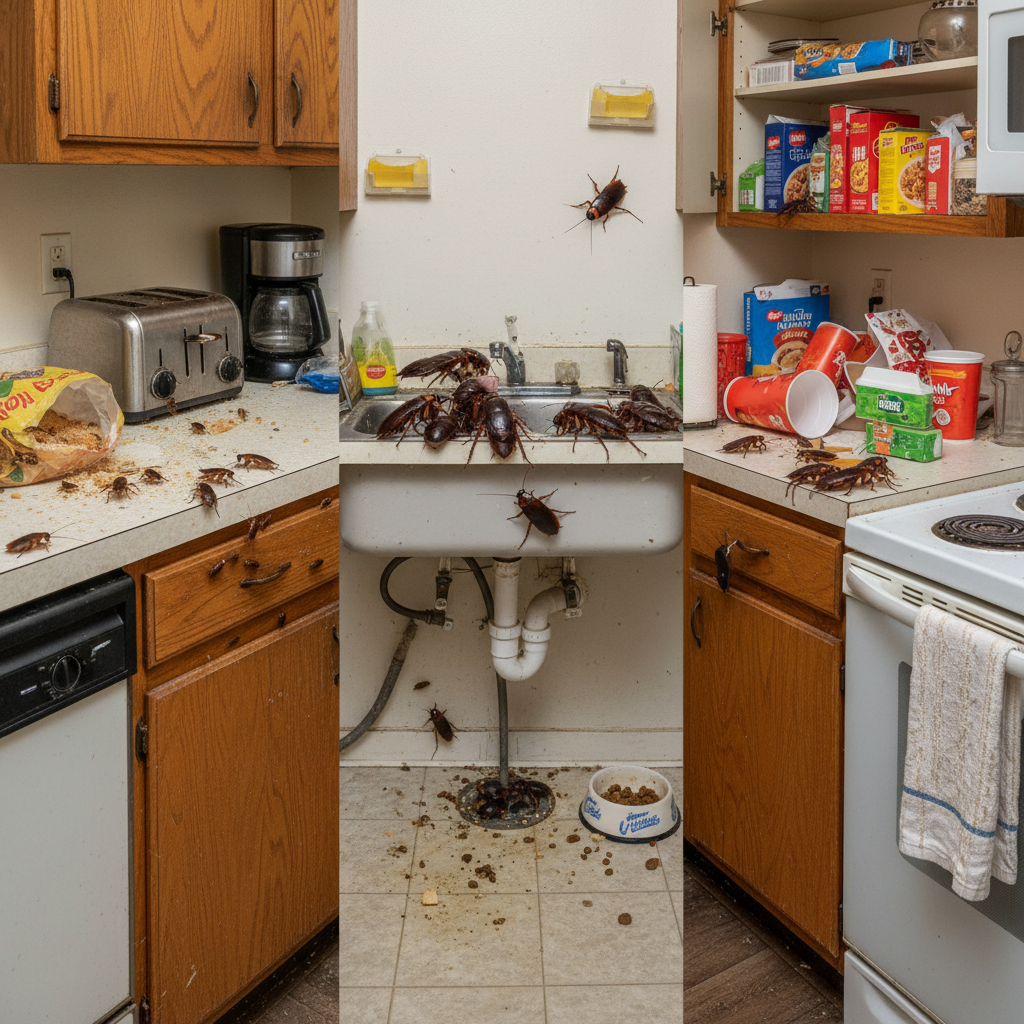
Three dark shapes on a Corona or Eastvale floor are not the same job. German cockroaches live with you—in the dishwasher hinges, the coffee maker, the kid’s backpack from a restaurant. Oriental cockroaches (“water bugs”) live in the wet world under the slab, the garage floor drain, and the HOA planter by a leaky hose bib, then wander in. American cockroaches are the big reddish ones—porch lights, sewer lines, commercial drains, palm skirts, and the occasional garage or attic run—not usually a cabinet-breeding colony like Germans.
We treat all three under roach control. Mis-identifying them wastes weeks. This is the kitchen-table version of what we look at on an inspection.
Quick ID without a lab
German cockroach (Blattella germanica)
- About half an inch to 5/8 inch as adults.
- Tan to light brown with two dark parallel stripes on the shield behind the head.
- Fast. Daytime sightings usually mean a large population.
- Egg cases (oothecae) tucked behind magnets, in toaster crumbs, in remote controls.
- Droppings like ground pepper on drawer corners and appliance gaskets.
- This is the classic inside the kitchen cabinets problem in Eastvale and Corona homes.
Oriental cockroach (Blatta orientalis)
- Bigger, stockier, shiny very dark brown to black.
- Females look almost wingless; they do not fly around the kitchen.
- Slower. Often found on garage floors, near water heaters, in floor drains, or in a shady side yard.
- Prefer cooler, wetter spots than Germans. A sudden crowd after irrigation or a sewer smell is a clue.
American cockroach (Periplaneta americana)
- Large—often 1½ to 2 inches. Reddish-brown, with a lighter “halo” pattern on the shield behind the head.
- Strong fliers for short, clumsy trips. Common around porch lights, tree wells, palm skirts, sewer cleanouts, and commercial kitchens.
- Prefer warm, humid harborage outdoors or in utility spaces. Indoors they show up in garages, laundry rooms, basements/crawl spaces where we have them, and sometimes upstairs if a chase or attic is connected to a wet wall.
- One American on the patio after a warm night is not the same emergency as a German nymph parade in the silverware drawer. A steady indoor run of big reds still needs a real look at drains and exterior harborage.
If you are not sure, one clear photo on a white piece of paper (size reference) beats guessing from TikTok.
Why the distinction matters in our climate
Inland Empire summers cook the slab edge. Germans still thrive because our interiors are air-conditioned and full of cardboard and crumbs—apartments, townhomes, and single-family kitchens alike. One egg case can restart a cabinet.
Orientals spike when:
- A water heater pan overflows
- The AC condensate line dumps into a side-yard well
- An HOA drain backs up
- You get a cool, wet week and they migrate from the meter pit
Americans spike when:
- Sewer or cleanout pressure pushes them up
- Palm skirts and thick landscaping hold humidity against the house
- Commercial or multi-unit drains nearby are loaded
- Warm nights + outdoor lighting pull them to the patio, then a garage door left open finishes the invite
Spray-and-wipe that looks like a German protocol (crack-and-crevice in the kitchen only) will not hold if the population is breeding in the garage floor drain or commuting from a sewer cleanout. The reverse is also true: mopping the garage does nothing to a German colony in the microwave, and fogging the patio does not empty a German fridge gasket.
Kitchens and yards: what you can do this afternoon
For suspect Germans:
- Empty the under-sink cabinet and look with a flashlight at the back corners. Live nymphs or pepper-like specks = kitchen breeders.
- Do not bring home used appliances or cardboard from a restaurant without a look.
- Run the dishwasher empty-hot after you find activity in the gasket.
- Store food in sealed containers; grease under the stove is a cafeteria.
For suspect Orientals:
- Fix leaks. Really fix them.
- Screen or cap floor drains if the plumbing allows (we will tell you if it does not).
- Reduce soggy mulch against the slab.
- Watch the water heater closet and the garage-house door sweep.
For suspect Americans:
- Trim palm skirts and dense foundation plants that hold moisture.
- Keep trash lids closed and pet food indoors overnight.
- Check sewer cleanouts and exterior drains after irrigation or a backup.
- Cut porch light time if you are feeding a nightly parade (or switch to less insect-attractive lighting where it makes sense).
Skip foggers. They scatter Germans into wall voids and do little to drain-dwelling Orientals or Americans staging outdoors. If a child or pet is in the home, tell us before we choose products—that is ordinary, not a special request.
Apartments, HOAs, restaurants, and the backyard
German infestations in townhomes sometimes start in a neighboring unit or a shared laundry. We need access honesty: if the HOA will not open the meter closet, say so. Oriental pressure often shared along a row of garages with the same drain design. American pressure often shared along a block with the same landscaping and sewer layout.
If you work in food service in Ontario or Corona and then cook at home, Germans hitchhike. That is not an accusation; it is a backpack and tote-bag inspection. Americans hitchhike less into backpacks and more into the property’s wet exterior.
We serve Eastvale, Corona, Norco, Jurupa Valley, and Riverside. The biology does not change at the county line.
What we do on a visit
Inspection first: kitchen appliances pulled if you agree, garage, baths, patio, and the wet side of the house. We identify species before we pick baits or residuals.
- German work is usually bait + targeted cracks, with a follow-up because eggs hatch on a delay.
- Oriental work leans moisture correction plus exterior/garage treatment.
- American work leans exterior harborage, drains/cleanouts, and entry points—not a month of cabinet gel alone.
We will not sell you a mystery “bug spray of the month” if the species does not match. If we find more than one—common on some older Corona and riverside properties—we sequence the work.
When to call the same day
- Roaches on counters while you are cooking
- Nymphs (tiny pale Germans) in a baby’s room
- A sudden black-roach push from a drain after a backup
- Large reddish Americans showing up indoors at night in numbers, not just one patio visitor
- You already tried three retail gels and the population climbed
Call (888) 273-7891, Monday–Friday 7am–6pm, or frank@ellettexterminator.net. Photos help: one of the insect on a white piece of paper and one of where you found it.
We are a small, local company. You will get a person who works these kitchens and yards, not a script about “any pest, anywhere.”
FAQ
Can German roaches live in a clean kitchen?
Yes. Clean slows them down. It does not remove a colony in a refrigerator compressor.
Are Oriental roaches a sign my house is filthy?
No. They track moisture and drains more than crumbs.
Is one American roach on the patio an infestation?
Usually not by itself. Repeated indoor sightings or a nightly crowd at the door is when we treat it as a property problem.
Do I need to empty the whole kitchen?
Sometimes the under-sink and stove for Germans. We will not demand a moving-day pack-out for a light job.
Will one visit finish Germans?
Plan on follow-up. Eggs do not care about the first appointment.
Get Your Free Pest Control Quote | Eastvale, CA Experts
Facing pests in your Eastvale, CA home or business? Ellett Exterminator offers reliable, local pest control services. Fill out our simple form to receive a free, no-obligation quote and consultation. We'll call you back quickly to discuss your pest problem and help you find the best solution. Reclaim your space from unwanted pests today!
More Blogs
Some other blogs you might be interested in