Blog

  • Rain Brings Ants Indoors: Winter Ant Control for Eastvale Homes

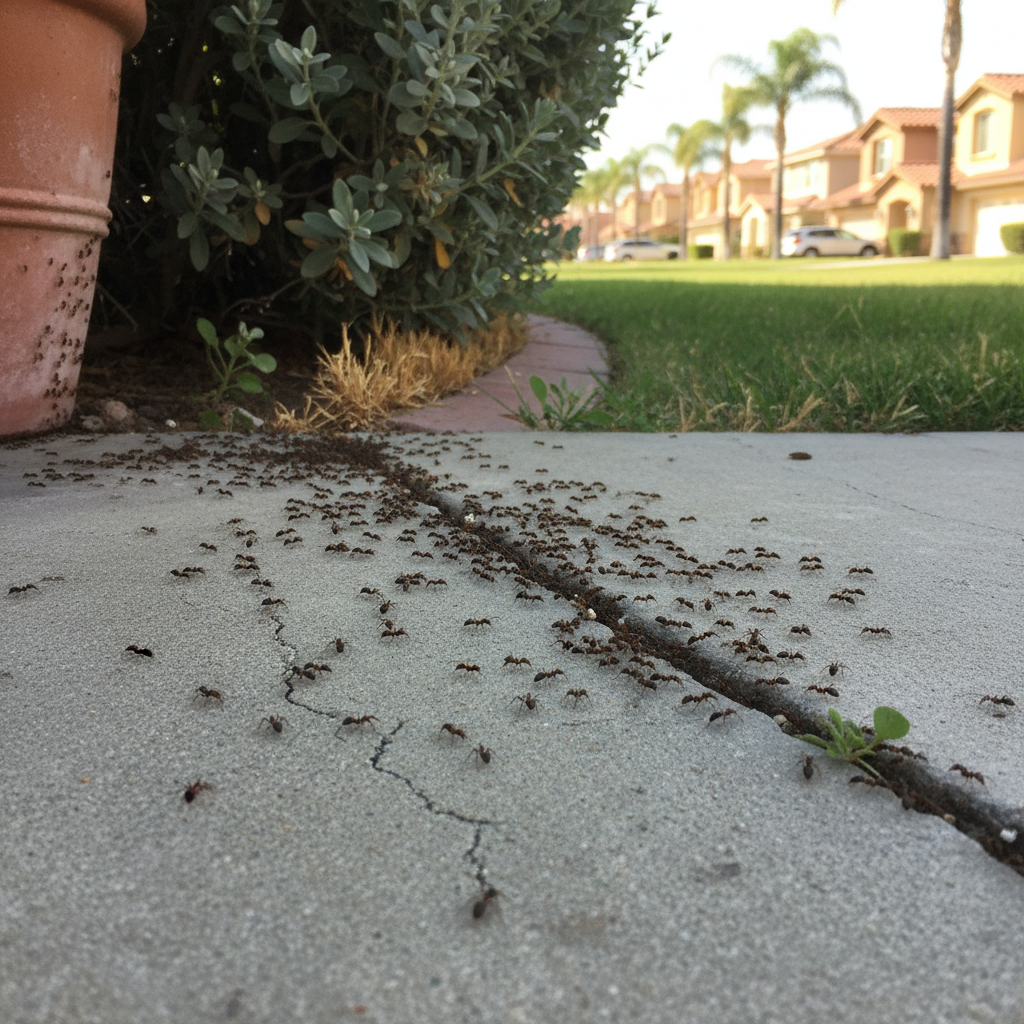
    The first real rain of the season hits Eastvale, and two days later there is a line of tiny brown ants marching across the kitchen counter, around the dishwasher, or straight into the bathroom vanity. If that sounds familiar, you are not imagining it. Every November through February we get the same calls from homeowners in 92880 and 91752: “We never had ants all summer, and now they’re inside.”

    Here is why rain pushes ants indoors in Eastvale, what to check around your home, and when it makes sense to call us.

    Why ants come inside when it rains

    Most of the ants we see in Eastvale homes are Argentine ants. Their nests sit shallow in the soil, under mulch, along block walls, and beneath patio slabs. When the ground soaks through, those nests flood. The colony does not wait it out. It packs up the queens and brood and heads for the closest dry, warm spot, and that is often the gap between your slab and your drywall.

    A few things make our neighborhoods especially prone to this:

    • Clay-heavy soil. Much of Eastvale sits on former dairy and farm ground that drains slowly, so nests stay waterlogged longer after a storm.
    • Tight lot lines. Newer tract homes share block walls and side yards, so one big colony can feed trails into several houses at once.
    • Cooler nights. Once evenings drop into the 40s, ants look for warmth as well as dry ground. Walls behind water heaters, dishwashers, and bathroom plumbing stay warm.
    • Less outdoor food. Aphid honeydew on shrubs drops off in winter, so ants forage harder for sugar and grease indoors.

    Where we find winter ant trails in Eastvale homes

    Winter trails look different from summer ones. Instead of patio and pet bowl traffic, we usually find ants coming up from below:

    • Along the baseboard at the kitchen sink or under the dishwasher.
    • Inside bathroom vanities where plumbing comes through the slab.
    • Around tub and shower drains and the edge of tile floors.
    • In the garage at the water heater closet and the weatherstrip on the house door.
    • In potted plants that got moved inside for the cold.
    • Around window frames on the side of the house that takes the most rain.

    If you see ants carrying small white grains, those are larvae and pupae. That means the colony is moving in, not just visiting for crumbs.

    What you can do before the next storm

    These steps will not wipe out a supercolony, but they cut down how many ants make it inside:

    1. Clear gutters and downspouts. Water dumping right next to the foundation floods the nests closest to your walls. Point downspouts away from the slab.
    2. Pull mulch and ground cover back. Keep a few inches of bare space between soil or mulch and the stucco weep screed.
    3. Seal the obvious gaps. Caulk around plumbing under sinks, along the backsplash, and at gaps in baseboard. Replace worn garage door weatherstrip.
    4. Wipe, don’t spray. Clean trails with soapy water to remove the scent path. Store-bought sprays scatter Argentine ants and can split one colony into several.
    5. Check plants before they come in. Tap the pot over a sheet of paper. If ants pour out, leave it outside.
    6. Keep sweet stuff sealed. Honey, syrup, pet food, and the recycling bin are top targets once outdoor food dries up.

    Why winter is a good time to treat ants

    A lot of people think ant control is a summer job. In Eastvale, winter is when colonies are bunched up near the house and easier to reach. When we treat in the wet season, we focus on:

    • Baits that foraging ants carry back to the queens, so the colony shrinks instead of scattering.
    • A non-repellent treatment at the foundation, weep screed, and entry points so ants pass through it without noticing.
    • Inside, targeted treatment at plumbing penetrations and the specific trail, not a blanket spray across your floors.
    • Timing applications between storms so rain does not wash them away.

    Knocking colonies down now also means fewer ants when the weather warms up in spring.

    When to call Ellett Exterminator

    Give us a call if trails keep coming back after you clean them, you see ants carrying brood, ants show up in more than one room, or the problem started after a storm and has not slowed down in a week. We serve Eastvale, Corona, Norco, Jurupa Valley, and nearby Inland Empire cities, and we know how these tract neighborhoods behave after a rain.

    Learn more about our ant control service, see our Eastvale pest control page, or read why Argentine ants take over HOA landscaping in summer.

    Ants marching in after the rain? Call Ellett Exterminator at (888) 273-7891, Monday through Friday, 7am to 6pm.
  • Just Moved Into an Eastvale Home? The Pests That Show Up in Year One

    Just Moved Into an Eastvale Home? The Pests That Show Up in Year One

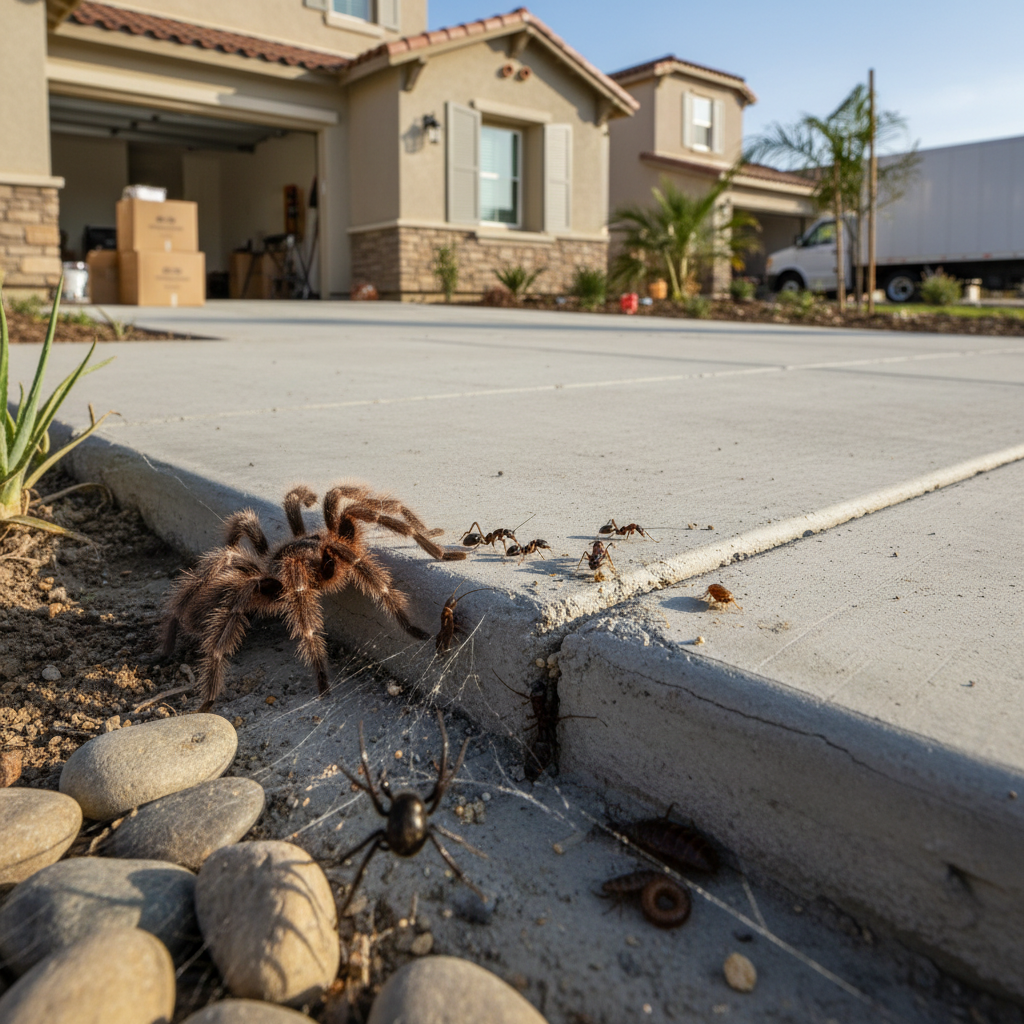
    A lot of our first calls from a new Eastvale address sound the same. The boxes are barely unpacked, the backyard sod just went in, and suddenly there is an ant trail on the kitchen counter, droppings in the garage, or webs on every patio light. People ask us if they bought a problem house. Almost always the answer is no. A new home, or a home that is new to you, just has a few predictable pest weak spots in the first year.

    Ellett Exterminator is a local, owner-run pest control company in Eastvale. This post covers what we see in newer tract homes and recent move-ins around Eastvale, Corona, Norco, and Jurupa Valley, and what to do about it before it turns into a bigger job.

    Why new homes get pests so fast

    The ground was just disturbed. Much of Eastvale was dairy land and open fields not that long ago, and grading for new streets and lots pushes ants, mice, and ground spiders out of the soil they were living in. They move to the nearest new structure with water and shelter, which is your slab.

    Fresh landscaping means fresh water. New sod, drip lines, and planter beds are watered heavily for the first few months. That moisture right against the foundation is exactly what Argentine ants and earwigs want.

    Construction gaps are still open. Builders do not always finish sealing every pipe and wire hole, and garage door bottom seals often need adjustment after the house settles. A gap the width of a pencil is enough for a house mouse.

    Empty lots and open space next door. If you back up to a field, a flood-control channel, or a lot still under construction, the pests living there will test your property line first.

    Moving boxes travel. Cardboard from a storage unit, a garage, or an older apartment can carry roaches or their egg cases. Used furniture, mattresses, and couches can bring bed bugs.

    What usually shows up, and when

    • Ants (first few weeks): Argentine ant trails along baseboards, the kitchen sink, and the bathroom are the most common first call. See our post on why HOA ant trails keep coming back.
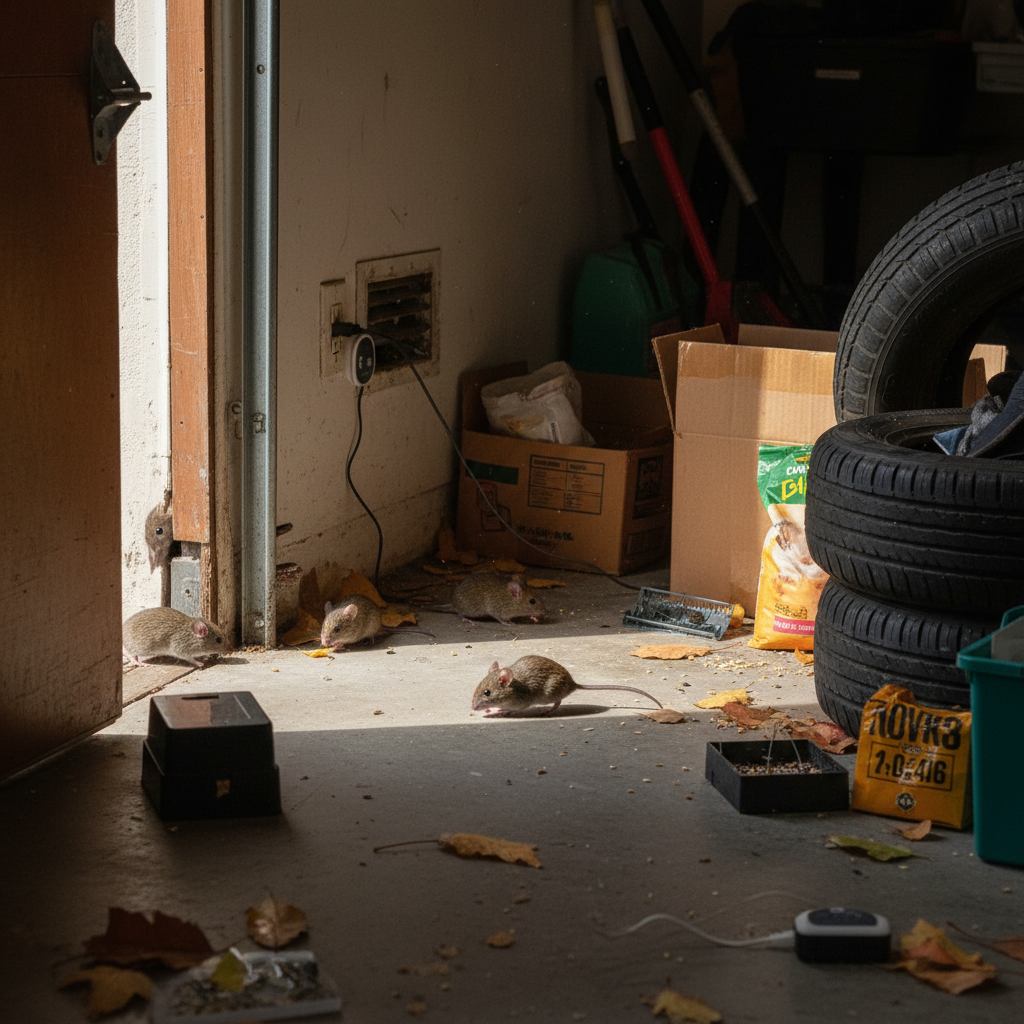
    • Mice (fall and winter): Droppings in the garage, the pantry, or the drawer under the oven. Our house mice in Eastvale garages post explains how they get in.
    • Spiders (first summer): New patio lights and fresh landscaping pull in insects, and spiders follow. Black widows like the dark corners of a new garage full of boxes.
    • Roaches (anytime): If you see small tan roaches in the kitchen soon after moving, they may have come in with boxes or appliances. Our German, Oriental, and American roach guide helps you tell which one you have.
    • Gophers (first rainy season): New lawns are soft and easy to dig. Fresh mounds in new sod are common. Read how gophers damage Eastvale lawns and HOA parkways.

    Your first 90 days checklist

    You do not need to do all of this in one weekend, but these steps head off most first-year calls.

    1. Check the garage door seal. Close the door and look for daylight at the corners and along the bottom. Replace or adjust the seal if you see any.
    2. Walk the outside of the house. Look where pipes, the AC line set, the dryer vent, and cable lines go into the stucco. Gaps should be sealed with caulk or, for anything a mouse could chew through, with metal mesh and sealant.
    3. Keep mulch and soil off the stucco. Leave a few inches of clear space between landscaping and the wall. Check that sprinklers are not spraying the foundation.
    4. Unpack and break down boxes quickly. Do not stack cardboard against garage walls for months. Plastic bins with lids are better for long-term storage.
    5. Inspect used furniture before it comes inside. Check mattress seams, couch cushions, and the joints of bed frames for small dark spots or bugs.
    6. Store pet food and birdseed in sealed containers. Open bags in the garage are a mouse buffet.
    7. Set the irrigation timer on purpose. Once new sod is established, cut back on watering. Less standing water near the house means fewer ants and earwigs.

    Things that waste money

    • Spraying store-bought ant spray on every trail. It kills the ants you see, and Argentine ant colonies often split and send more. A baited, targeted approach works better.
    • Bug bombs in a new house. Foggers do not reach where pests hide and leave residue on everything you just unpacked.
    • Assuming the builder warranty covers pests. Builder warranties usually cover construction defects, not ants or mice. It is worth reading yours, but plan to handle pests yourself or with a pest control company.

    When to call us

    Call if ant trails keep coming back after a week or two of cleanup, you find mouse droppings in more than one spot, you see roaches during the day, or you wake up with bites you cannot explain. Those are signs the problem has moved past what the checklist can handle.

    What a first visit from us looks like

    We start outside, walking the foundation, garage door, utility penetrations, and landscaping. Then we check the garage, kitchen, bathrooms, and laundry area. You get a plain list of what we found, what we will treat, and what you can seal or change yourself.

    From there we set up the right plan for what is actually there: ant control, rodent control, roach control, bed bug treatment, or flea control if your pets brought some along. Many new homeowners stay on a regular service plan so the first year does not turn into a constant fight.

    Quick FAQ

    Is it normal to have ants in a brand new house? Yes. Ants are the most common first-year pest we see in new Eastvale homes. It does not mean the house was built badly.

    Should I treat before I move in? If the house is empty, it is a good time for an outside treatment and a walk-through, since we can see every baseboard and corner without furniture in the way.

    Do you work in HOA communities? Yes. Most of our Eastvale customers live in HOA neighborhoods. We will point out anything that belongs to the HOA, like common area landscaping or shared walls.

    Is your treatment safe for kids and pets? We tell you where we treat and how long to keep kids and pets away from treated areas, and we place bait stations where they cannot be reached.

    Settling into a new Eastvale home?

    Ellett Exterminator is owned and run by Frank Ellett. We serve Eastvale (92880 and 91752), Corona, Norco, Jurupa Valley, and Riverside. Call (888) 273-7891, Monday through Friday from 7am to 6pm, or email frank@ellettexterminator.net. You can also start from our Eastvale service area page.

  • House Mice in Eastvale Garages: Why Fall Brings Them Inside and How to Stop It

    House Mice in Eastvale Garages: Why Fall Brings Them Inside and How to Stop It

    October is when the mouse calls start in Eastvale. Nights drop into the 50s, the fields and flood-control channels along the river dry out, and a mouse that spent the summer outside starts looking for a warm garage. A few weeks later someone finds droppings in the dog food bin or hears light scratching behind the laundry wall.

    Ellett Exterminator handles rodent control for Eastvale homes and nearby cities. This post is about house mice, the small ones that live at floor level. If you are hearing heavier movement in the attic or finding chewed citrus, read our post on roof rats around Eastvale trails, attics, and fruit trees instead. Different animal, different plan.

    Mouse or rat? Quick ways to tell

    • Droppings: mouse droppings are about the size of a grain of rice with pointed ends. Roof rat droppings are noticeably bigger, closer to half an inch.
    • Where you find them: mice leave droppings along garage walls, in kitchen drawers, under the sink, and behind the stove. Rats tend to leave them in the attic, on rafters, and near fruit trees.
    • Noise: mice sound like light skittering inside a wall or a cabinet. Rats sound heavier and more often come from overhead.
    • Damage: mice chew small, neat holes in cereal boxes, bird seed bags, and pet food. They shred paper, cardboard, and insulation for nests.

    Not sure? Take a photo of the droppings next to a coin and send it when you call. That one photo saves a lot of guessing.

    Why Eastvale garages are mouse magnets

    Most Eastvale homes are tract builds with an attached garage, and the garage is where mice get in first. Here is what we see over and over:

    • Worn garage door seals. The rubber bottom seal flattens or cracks, especially at the corners. A house mouse can squeeze through a gap about the size of a dime.
    • Side doors and weatherstripping. The pedestrian door to the side yard often has daylight showing at the bottom.
    • Pet food and bird seed. Big bags stored on the garage floor are the number one food source we find. Mice do not need much.
    • Cardboard boxes against the wall. Holiday decorations and moving boxes stacked on the floor give mice cover and nesting material.
    • Water heater and laundry closets. Gaps around pipes and the dryer vent line lead from the garage into the walls.
    • Fridge or freezer in the garage. The warm motor area underneath is a favorite nesting spot.

    Homes that back up to open land, the Santa Ana River trail side, or newer construction next to graded lots get more pressure in fall. Corona, Norco, Jurupa Valley, and Riverside homes see the same pattern, especially near equestrian property and feed storage.

    How fast a few mice turn into a problem

    House mice breed quickly, and a female can have several litters a year. One or two mice in October can be a dozen or more by the holidays if food and nesting spots stay available. That is why we tell people not to wait and see. The earlier we find the entry points, the smaller the job.

    What you can do this weekend

    Helpful:

    • Move pet food, bird seed, and grass seed into hard plastic or metal bins with tight lids.
    • Get boxes off the floor and onto shelves, and leave a few inches between storage and the wall so you can see droppings.
    • Check the garage door bottom seal in daylight with the door closed. If you can see light at the corners, replace the seal.
    • Add a door sweep to the side-yard door if there is a gap underneath.
    • Look behind the water heater and washer for gaps around pipes and lines.
    • Clean up droppings carefully: wear gloves, spray them with a disinfectant first, and wipe them up instead of sweeping or vacuuming dry droppings.

    What usually wastes your time:

    • Ultrasonic plug-ins. We have not seen them replace trapping and sealing.
    • Glue boards everywhere. They catch a few mice, but they do not fix the gap that lets the next ones in.
    • Tossing poison pellets around the garage. Pets and kids find them, and mice that eat them can die inside a wall where you will smell them for weeks.
    • Peppermint oil and dryer sheets. Nice smell, no lasting effect.

    When to call us

    Call if you are finding fresh droppings in more than one spot, you hear activity inside the walls, you see a mouse during the day, or you have already set traps for a couple of weeks and are still catching mice. Daytime sightings and steady catches usually mean there are more than you think.

    What our rodent visit looks like

    We start outside, walking the garage door, side door, utility lines, weep screed, and vents. Then we look inside the garage, laundry area, kitchen cabinets, and under appliances. You get a clear list of where mice are getting in and what needs to be sealed.

    From there we set a trapping plan for the inside and use tamper-resistant bait stations outside when the situation calls for it. We come back to check activity, because one empty trap does not prove the job is done. Sealing and trapping go together. Our rodent control service page has more on the full process.

    Quick FAQ

    Are mice in the garage a sign the house is dirty? No. Fall mice show up in clean homes all the time. They are looking for warmth and an easy gap, not a mess.

    Will my cat or dog take care of it? Sometimes a pet catches one, but pets do not stop mice from coming in. A dog food bowl left out overnight can actually make it worse.

    Can I stay in the house while you treat for mice? Yes. We keep traps and stations out of reach of kids and pets and tell you where everything is.

    Do you service HOA communities and townhomes? Yes. In shared buildings, mice can move between units, so we will point out what is yours to fix and what to bring to the HOA.

    Get mice out of your Eastvale garage before winter

    Ellett Exterminator is a local, owner-run company led by Frank Ellett. We serve Eastvale (92880 and 91752), Corona, Norco, Jurupa Valley, and Riverside. Call (888) 273-7891, Monday through Friday from 7am to 6pm, or email frank@ellettexterminator.net. You can also start from our Eastvale service area page.

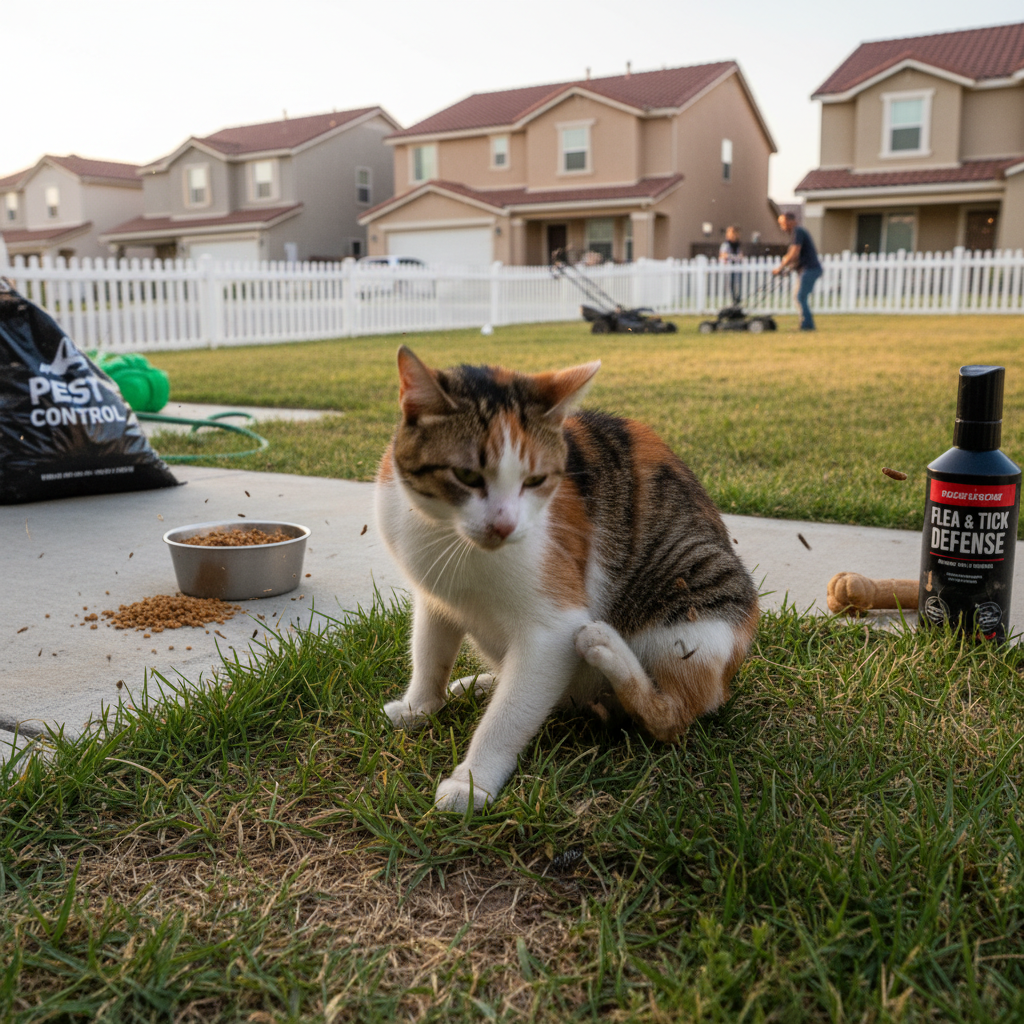
  • Fleas in Eastvale Yards and Homes: Pets, HOA Grass, and What Actually Stops Them

    Fleas in Eastvale Yards and Homes: Pets, HOA Grass, and What Actually Stops Them

    Fleas in Eastvale: Pets, Yards, and Getting the Jumpers Out of the House

    Late summer into fall is when Eastvale flea calls spike. The dog looks miserable, someone gets bitten on the ankles in the living room, and the HOA parkway still looks fine from the curb. Fleas do not care about your curb appeal. They care about a warm host and a soft place for eggs to drop.

    Ellett Exterminator handles flea control for Eastvale homes and nearby cities. We are not a termite company. This post is about fleas on pets, in yards, and in the rooms where people actually sit.

    Why Eastvale gets fleas (even “clean” houses)

    Tract irrigation keeps grass soft. Dogs walk the same parkway loops on Limonite, Hellman, and the river-adjacent trails. A few fleas hitch a ride, drop eggs in the carpet or under the couch, and two weeks later you have a house problem that started outside.

    Apartments and townhomes with shared turf see the same pattern. The neighbor’s untreated dog is not your fault, but the eggs in your living room are still your problem.

    Cats that go outdoors, foster pets, and visiting dogs all count. Fleas are not a hygiene insult. They are a biology problem.

    Pet fleas vs house fleas (they are the same species)

    The fleas on your dog and the ones jumping at your ankles are usually the same cat flea, Ctenocephalides felis, which happily bites dogs, cats, and people. Finding “only” a few on the pet while the carpet is loaded is normal. Adults spend time on the host; eggs and larvae live off the host in carpet, cracks, and shaded yard debris.

    If you only treat the pet and skip the house and yard, the pet walks back into a nursery.

    What we see locally

    • Ankle bites in the evening on carpet or near pet beds
    • Pets chewing the base of the tail or belly
    • “We washed everything and they came back” after a weekend of vacuuming
    • Yard shade under shrubs and along fences where dogs rest
    • Second-wave hatches 1–2 weeks after a partial DIY spray

    Corona, Jurupa Valley, Norco, and Riverside homes get the same pattern when irrigation and pets overlap. Eastvale’s dense HOA grass just makes the yard side easy to underestimate.

    DIY that helps (and what wastes a Saturday)

    Helpful:

    1. Vet-approved pet treatment on every pet in the home, on schedule. Ask your vet; we do not prescribe.
    2. Vacuum carpets, baseboards, and under furniture daily for a stretch. Bag or empty outside.
    3. Wash pet bedding in hot water.
    4. Mow and thin dense shade where the dog lounges. Dry that strip out a bit.

    Not a plan:

    • Essential-oil bombs that smell like a candle shop and leave fleas in the baseboard
    • One can of fogger with the pets “just in the other room”
    • Yard granules with no pet plan and no indoor follow-up
    • Assuming the HOA sprayed the parkway so your sofa is fine

    How we clear an Eastvale flea job

    We inspect where the pets sleep, where people get bitten, and the outdoor rest spots. Treatment is aimed at the life stages that DIY usually misses, indoors and in the yard zones that matter, with pet and kid safety in mind.

    Expect a short window where you still see some activity. Eggs already in the carpet can hatch after the first visit. That is why a follow-up is part of a real flea job, not an upsell. We will say if the pressure looks like a one-and-done versus a two-visit clear.

    Tell us up front:

    • How many dogs/cats, and what flea product they are on
    • Where bites happen (ankles on carpet, bedroom, garage)
    • Whether a foster or visitor pet was around in the last month
    • Gate codes and which rooms matter most

    When to call us

    Call if pets are miserable, people are getting bitten indoors, or you already tried a store kit and the jumpers returned. Same-week service is normal. Mention fleas when you book so we do not show up for a simple ant trail.

    (888) 273-7891, Monday–Friday 7am–6pm. frank@ellettexterminator.net. Service areas include Eastvale, Corona, Jurupa Valley, Norco, and Riverside. Our flea control page is the service overview; this post is the local how-and-why.

    FAQ

    Can fleas live without a pet? For a while, yes, especially if people or visiting animals still feed them. An empty house cools off slower than people hope.

    Do we need to leave for the day? We will tell you the re-entry window for the products we use. It is usually measured in hours, not overnight camping.

    Will the HOA fix the parkway? Sometimes they treat common turf. That does not finish eggs in your carpet. Plan for the house either way.

    Is this the same as bed bugs? No. Different pest, different signs. If you only get bites in bed with no pet itching, say that when you call so we inspect for the right thing.

  • Eastvale Seasonal Pest Calendar: What Shows Up Month by Month – Your Eastvale / Riverside County Local Guide

    Eastvale Seasonal Pest Calendar: What Shows Up Month by Month – Your Eastvale / Riverside County Local Guide

    Eastvale Seasonal Pest Calendar: What Shows Up Month by Month in Riverside County

    Eastvale pest pressure runs year-round because of warm Inland Empire days, Santa Ana winds, HOA irrigation, citrus, and the Santa Ana River corridor. This guide covers Eastvale, Corona, Norco, Jurupa Valley, and Riverside County.

    We do not service termites; use a separate wood-destroying-insect specialist. We treat ants, roaches, rodents, wasps, fleas, spiders, and gophers.

    January-February: Roof rats, mice, German roaches, and Argentine ants near irrigated beds. Seal gaps and store pet food in hard containers.

    March-April: Irrigation wakes Argentine ants; wasp scouts and fleas appear. Fix leaks, avoid overwatering, and wipe spills.

    May-June: Peak ants and early wasps. Watch kitchens, eaves, patio furniture, and fruit trees. Do not swat a high yellowjacket nest.

    July-August: Yellowjackets gather at trash and dining areas; fleas use lawns; Oriental and American roaches use drains, mulch, and garages. Keep lids tight and coordinate pet areas with your vet.

    September-October: Roof rats enter attics; wasps get defensive; gophers mound lawns and HOA parkways; German roaches return. Inspect roof edges and act on fresh mounds.

    November-December: Mice, rats, and roaches move indoors. Watch garages, ovens, and dishwashers; act on droppings.

    Quick reference: ants Mar-Jun; German roaches any month; wasps May-Oct; roof rats Sep-Feb; fleas May-Sep; gophers spring-fall; spiders warm months and fall.

    How we use this: Tell us the month and what you see. An Eastvale HOA ant trail differs from a September attic scratch near the river.

    Call Ellett Exterminator, Eastvale and Riverside County: (888) 273-7891. Owner Frank Ellett. Local, practical, no fake staff bios.

    FAQ: Late winter or early spring is best for prevention, but call when activity starts. We treat the pests listed above, not termites. Ants return after counter spray because the colony is outside.

  • Horse Property Pests in Norco and Jurupa Valley

    Horse Property Pests in Norco and Jurupa Valley

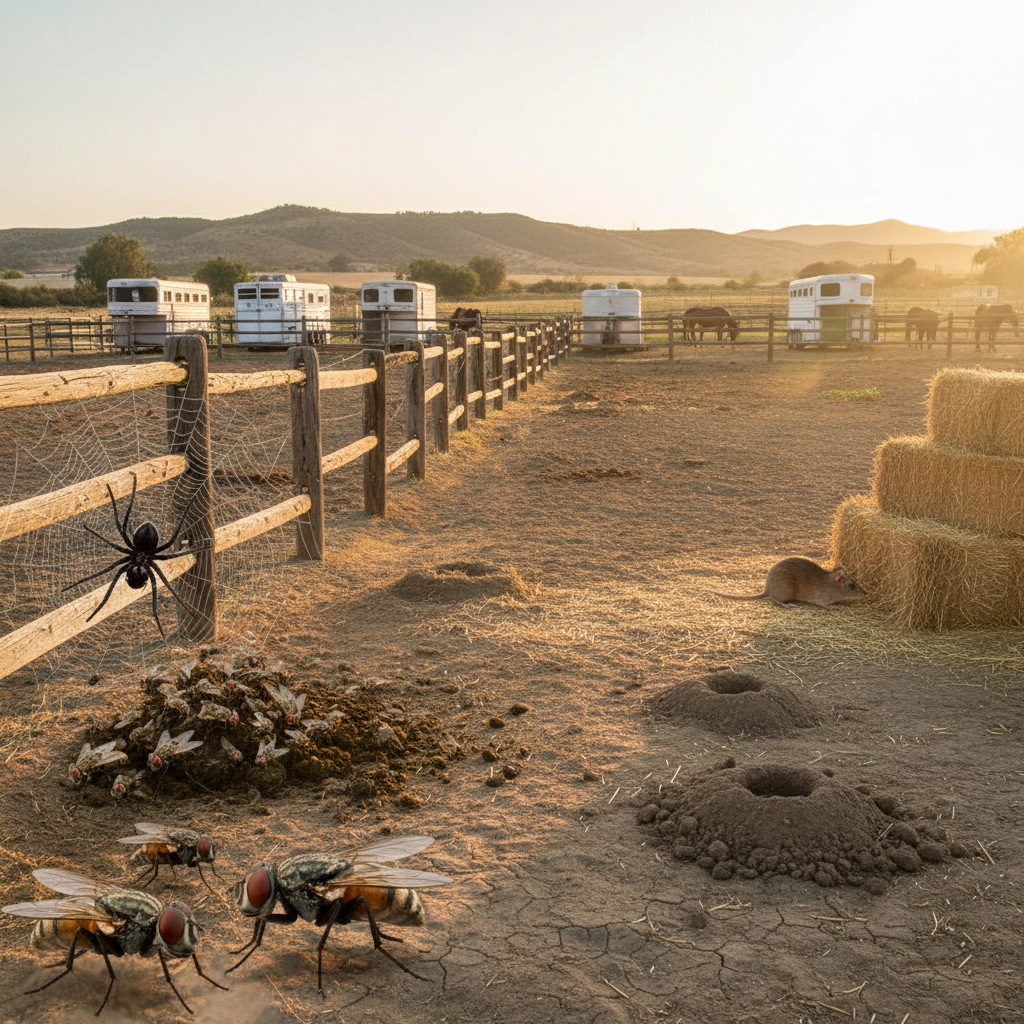
    Horse Property Pests in Norco and Jurupa Valley: Flies, Rodents, and Fleas Around the Barn

    Norco still calls itself Horse Town USA for a reason. Jurupa Valley has the same mix of homes, arenas, and feed that draws pests year-round. If you keep horses on a few acres off Hamner, River, or near the Santa Ana River corridor, you are not fighting the same ant trail as a tract house in Eastvale. Manure, spilled grain, standing water in troughs, and open tack rooms change the whole picture.

    We service Norco and Jurupa Valley horse properties for the pests that actually show up around barns: flies, rodents, and fleas. Here is the practical version, not a ranching lecture.

    Why barns pull pests in

    Flies. Fresh manure, wet bedding, and damp corners near wash racks breed them. House flies and stable flies both show up. Stable flies bite. If your horses are stomping and swishing all afternoon in September heat, look at breeding sites before you buy another bag of spray.

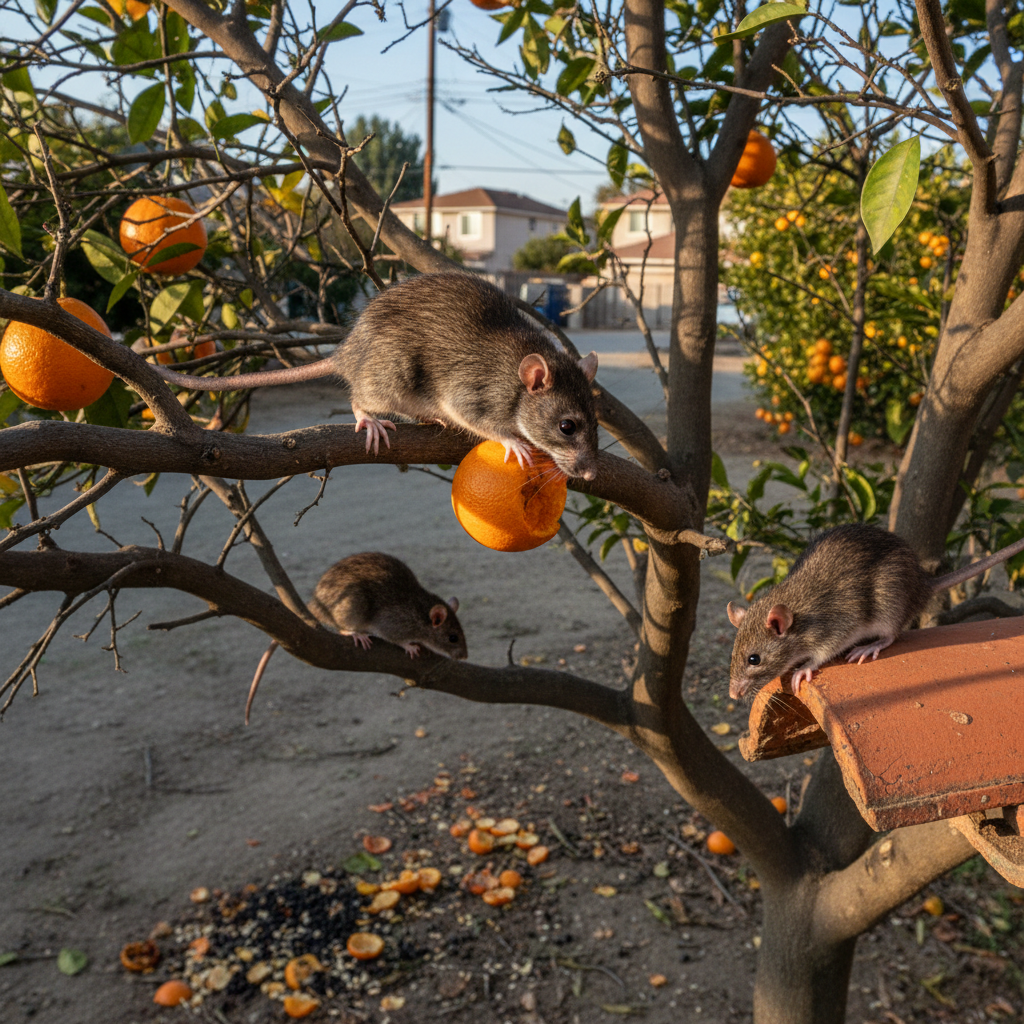
    Rodents. Roof rats and mice move for grain, sweet feed, and bird seed. They nest in stacked hay, wall voids in the barn office, and the fascia on the house fifty feet away. Droppings on the feed room shelf are not “just country living.” They are a contamination and fire-risk problem (chewed wiring).

    Fleas. Dogs, barn cats, and wildlife under the deck keep fleas going. Horses are not the main host, but the house and the dog runs next to the barn often are. Treating only the living room while the dog sleeps in the tack room is how fleas bounce back.

    We do not treat termites. If someone else already scoped the barn for wood-destroying insects, that is a separate conversation. Our lane here is flies, rodents, and fleas.

    What we see on Norco and Jurupa calls

    • Feed rooms with open bags and a mouse highway along the baseboard
    • Water trough overflow creating a mud flat that breeds flies
    • Compost or manure piles too close to the house and patio
    • Roof rats using citrus and avocado near the river, then crossing into the barn loft
    • Fleas in the dog bed by the arena gate after a warm stretch

    Jurupa Valley lots along the river get more rat pressure. Norco properties with dense boarding activity get more fly pressure when manure management slips for a week.

    What actually helps

    Flies. Break the breeding cycle. Scrape and haul on a schedule that matches how many horses you keep. Dry out wet spots. We can treat resting sites and use products labeled for the setting, but chemistry without sanitation is a temporary fog. Tell us where the pile sits and whether you have a service that hauls.

    Rodents. Seal the feed room the way you would seal a pantry. Hard containers. No open sweet feed. Exclusion on the barn and the house: gaps at doors, pipe penetrations, and roof edges. Trapping and bait stations where pets, kids, and horses cannot reach them. We will not place bait where a dog or a curious goat can get it.

    Fleas. Treat the animals’ resting areas and the yard zones they use, not just the carpet. Coordinate with your vet on the pets themselves. We handle the environment.

    Same visit can cover more than one issue when the property layout makes sense. A fly-only call that ignores the rat highway in the feed room is half a job.

    What we need before we roll up

    • Gate code, dog situation, and which buildings we can enter
    • Rough horse count and whether boarders use the barn
    • Photos of the feed room, manure area, and any droppings or flea hot spots
    • Whether anyone is chemically sensitive or if you have a pregnant mare in a specific stall we should stage around

    We work around chore schedules when you tell us. Showing up at feeding time without a heads-up wastes everyone’s morning.

    Call

    Ellett Exterminator. Norco, Jurupa Valley, and the rest of our Riverside County routes. (888) 273-7891. Say “horse property” and which pest is loudest right now so we bring the right kit.

    Owner Frank Ellett. Local, no fake call-center script.

    FAQ

    Do you spray the whole acreage?

    We treat the structures and the pest pressure zones that matter. Fogging five empty acres because a fly flew by is not the plan.

    Will bait hurt my dogs or horses?

    Not if placement is done right. We use locked stations and locations animals cannot reach. If your layout cannot support that safely, we switch methods.

    Can you come when I’m at work?

    Yes, with a gate code and clear building access notes. Leave the feed room unlocked if that is the problem area.

    Do you also cover Eastvale homes next door?

    Yes. Same company, different property type. Horse property work just takes a longer walk and a different checklist.

  • Eastvale Gophers: Protect Your Lawns & HOA Parkways from Damage

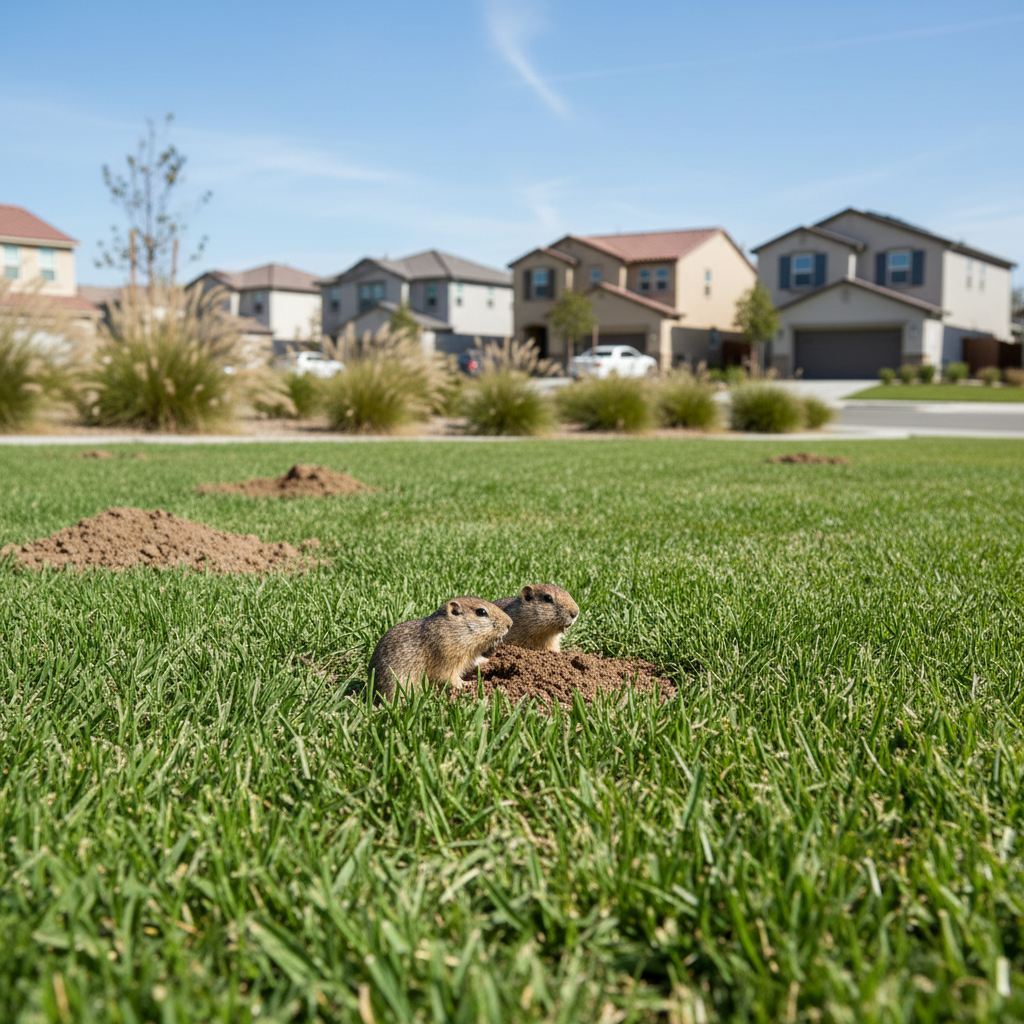
    Eastvale Gophers: Protect Your Lawns & HOA Parkways from Damage

    Gophers in Eastvale: The Mounds, the Irrigation, and What Actually Works

    Eastvale was dairy land not that long ago. Gophers never got the memo that it is tract housing now. If your parkway on Limonite or the back lawn in Cortina looks like it grew fresh dirt volcanoes overnight, you are not dealing with “moles.” In this part of Riverside County it is almost always pocket gophers. They eat roots, heave irrigation, and undermine brick borders. HOA notices about “please fix your lawn” usually start here.

    We already get asked about gophers on Eastvale inspections even though the service menu on the site still leads with ants, roaches, rodents, bed bugs, and fleas. This is the straight version of how we handle yards here.

    Gopher vs mole vs ground squirrel, 30 seconds

    • Gopher: crescent or fan-shaped mounds, plugged holes, damage from below. Plants sink or die in a line.
    • Mole: rare as the main problem in Eastvale turf. Ridges more than fan mounds.
    • Ground squirrel: open burrows you can look into, activity in the open during the day, often along slopes and vacant lots, more Corona and river-adjacent than a front lawn.

    If you have a ring of fresh soil and a tomato that disappeared into the earth, that is a gopher.

    Why Eastvale yards get hit

    Constant irrigation. Soft soil. HOA parkways that are never trapped, so the next lot is a reservoir. New landscaping after a home sale disturbs an old runway and the gopher relocates into the next yard. Solar farms and open lots west of the river do not help.

    People dump chewing gum, ultrasonic spikes, or a flood from the hose into the hole. The gopher has a whole system. You flooded one closet.

    What works

    Trapping in active laterals, done by someone who can tell active from old. That is still the cleanest method for a residential Eastvale lot. Baiting has a place on larger or heavily tunneled properties, with restrictions around pets, kids, and HOA common area. We will say no if the placement would be stupid.

    We also look at the irrigation leak that is keeping the soil perfect. Fix the leak or you are feeding the next gopher.

    What we need from you before we come

    • Photos of the mounds (fresh vs crusted).
    • Whether dogs use that yard off-leash.
    • Whether the HOA already hired someone who “gassed” the parkway last month (that changes what we will find).
    • Gate code and which side of the house is active.

    Same-week service is normal. Same-day is for a horse or a dog already in trouble, or a mound field that is heaving a walkway.

    HOA politics, briefly

    If the mounds are in the parkway, ask who owns that strip. Trapping only your backyard while the parkway stays loaded is how the mounds return. We can treat both when we have permission. We cannot trespass on a neighbor’s lot because you are mad at their dirt piles.

    Call

    Ellett Exterminator, Eastvale. (888) 273-7891. If gophers are tearing up the lawn, say that when you call so we do not show up with only an ant kit.

    FAQ

    Will they kill my fruit trees?

    They can girdle roots on young trees. Mature citrus is more likely to look thirsty and sad than to fall over, but the irrigation damage is still real.

    Is this a one-time visit?

    Often a few visits. Gophers from the next lot move in. We will tell you if the pressure looks like a maintenance problem.

    Are smoke bombs a good idea?

    No. They are inconsistent, a fire/fume hassle in a packed tract, and they do not map the system.

    Do you service Corona and Norco for gophers too?

    Yes. The same animal, same method. Horse property fencing and slopes just take longer to walk.

  • Roach Rundown: German, Oriental, American – Which Pests Are in Your Inland Empire Kitchen?

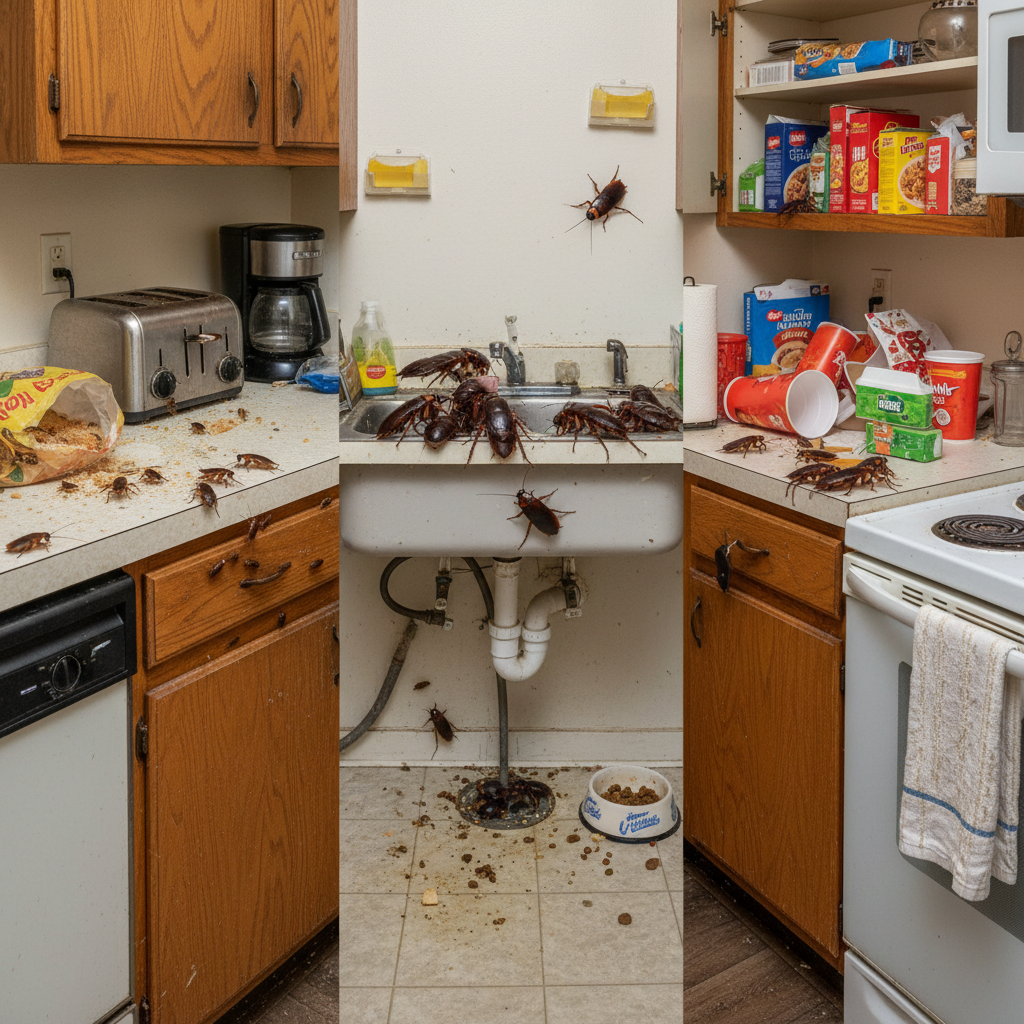
    Roach Rundown: German, Oriental, American – Which Pests Are in Your Inland Empire Kitchen?

    German vs Oriental vs American Roaches in Inland Empire Kitchens

    Three dark shapes on a Corona or Eastvale floor are not the same job. German cockroaches live with you—in the dishwasher hinges, the coffee maker, the kid’s backpack from a restaurant. Oriental cockroaches (“water bugs”) live in the wet world under the slab, the garage floor drain, and the HOA planter by a leaky hose bib, then wander in. American cockroaches are the big reddish ones—porch lights, sewer lines, commercial drains, palm skirts, and the occasional garage or attic run—not usually a cabinet-breeding colony like Germans.

    We treat all three under roach control. Mis-identifying them wastes weeks. This is the kitchen-table version of what we look at on an inspection.

    Quick ID without a lab

    German cockroach (Blattella germanica)

    • About half an inch to 5/8 inch as adults.
    • Tan to light brown with two dark parallel stripes on the shield behind the head.
    • Fast. Daytime sightings usually mean a large population.
    • Egg cases (oothecae) tucked behind magnets, in toaster crumbs, in remote controls.
    • Droppings like ground pepper on drawer corners and appliance gaskets.
    • This is the classic inside the kitchen cabinets problem in Eastvale and Corona homes.

    Oriental cockroach (Blatta orientalis)

    • Bigger, stockier, shiny very dark brown to black.
    • Females look almost wingless; they do not fly around the kitchen.
    • Slower. Often found on garage floors, near water heaters, in floor drains, or in a shady side yard.
    • Prefer cooler, wetter spots than Germans. A sudden crowd after irrigation or a sewer smell is a clue.

    American cockroach (Periplaneta americana)

    • Large—often 1½ to 2 inches. Reddish-brown, with a lighter “halo” pattern on the shield behind the head.
    • Strong fliers for short, clumsy trips. Common around porch lights, tree wells, palm skirts, sewer cleanouts, and commercial kitchens.
    • Prefer warm, humid harborage outdoors or in utility spaces. Indoors they show up in garages, laundry rooms, basements/crawl spaces where we have them, and sometimes upstairs if a chase or attic is connected to a wet wall.
    • One American on the patio after a warm night is not the same emergency as a German nymph parade in the silverware drawer. A steady indoor run of big reds still needs a real look at drains and exterior harborage.

    If you are not sure, one clear photo on a white piece of paper (size reference) beats guessing from TikTok.

    Why the distinction matters in our climate

    Inland Empire summers cook the slab edge. Germans still thrive because our interiors are air-conditioned and full of cardboard and crumbs—apartments, townhomes, and single-family kitchens alike. One egg case can restart a cabinet.

    Orientals spike when:

    • A water heater pan overflows
    • The AC condensate line dumps into a side-yard well
    • An HOA drain backs up
    • You get a cool, wet week and they migrate from the meter pit

    Americans spike when:

    • Sewer or cleanout pressure pushes them up
    • Palm skirts and thick landscaping hold humidity against the house
    • Commercial or multi-unit drains nearby are loaded
    • Warm nights + outdoor lighting pull them to the patio, then a garage door left open finishes the invite

    Spray-and-wipe that looks like a German protocol (crack-and-crevice in the kitchen only) will not hold if the population is breeding in the garage floor drain or commuting from a sewer cleanout. The reverse is also true: mopping the garage does nothing to a German colony in the microwave, and fogging the patio does not empty a German fridge gasket.

    Kitchens and yards: what you can do this afternoon

    For suspect Germans:

    • Empty the under-sink cabinet and look with a flashlight at the back corners. Live nymphs or pepper-like specks = kitchen breeders.
    • Do not bring home used appliances or cardboard from a restaurant without a look.
    • Run the dishwasher empty-hot after you find activity in the gasket.
    • Store food in sealed containers; grease under the stove is a cafeteria.

    For suspect Orientals:

    • Fix leaks. Really fix them.
    • Screen or cap floor drains if the plumbing allows (we will tell you if it does not).
    • Reduce soggy mulch against the slab.
    • Watch the water heater closet and the garage-house door sweep.

    For suspect Americans:

    • Trim palm skirts and dense foundation plants that hold moisture.
    • Keep trash lids closed and pet food indoors overnight.
    • Check sewer cleanouts and exterior drains after irrigation or a backup.
    • Cut porch light time if you are feeding a nightly parade (or switch to less insect-attractive lighting where it makes sense).

    Skip foggers. They scatter Germans into wall voids and do little to drain-dwelling Orientals or Americans staging outdoors. If a child or pet is in the home, tell us before we choose products—that is ordinary, not a special request.

    Apartments, HOAs, restaurants, and the backyard

    German infestations in townhomes sometimes start in a neighboring unit or a shared laundry. We need access honesty: if the HOA will not open the meter closet, say so. Oriental pressure often shared along a row of garages with the same drain design. American pressure often shared along a block with the same landscaping and sewer layout.

    If you work in food service in Ontario or Corona and then cook at home, Germans hitchhike. That is not an accusation; it is a backpack and tote-bag inspection. Americans hitchhike less into backpacks and more into the property’s wet exterior.

    We serve Eastvale, Corona, Norco, Jurupa Valley, and Riverside. The biology does not change at the county line.

    What we do on a visit

    Inspection first: kitchen appliances pulled if you agree, garage, baths, patio, and the wet side of the house. We identify species before we pick baits or residuals.

    • German work is usually bait + targeted cracks, with a follow-up because eggs hatch on a delay.
    • Oriental work leans moisture correction plus exterior/garage treatment.
    • American work leans exterior harborage, drains/cleanouts, and entry points—not a month of cabinet gel alone.

    We will not sell you a mystery “bug spray of the month” if the species does not match. If we find more than one—common on some older Corona and riverside properties—we sequence the work.

    When to call the same day

    • Roaches on counters while you are cooking
    • Nymphs (tiny pale Germans) in a baby’s room
    • A sudden black-roach push from a drain after a backup
    • Large reddish Americans showing up indoors at night in numbers, not just one patio visitor
    • You already tried three retail gels and the population climbed

    Call (888) 273-7891, Monday–Friday 7am–6pm, or frank@ellettexterminator.net. Photos help: one of the insect on a white piece of paper and one of where you found it.

    We are a small, local company. You will get a person who works these kitchens and yards, not a script about “any pest, anywhere.”

    FAQ

    Can German roaches live in a clean kitchen?

    Yes. Clean slows them down. It does not remove a colony in a refrigerator compressor.

    Are Oriental roaches a sign my house is filthy?

    No. They track moisture and drains more than crumbs.

    Is one American roach on the patio an infestation?

    Usually not by itself. Repeated indoor sightings or a nightly crowd at the door is when we treat it as a property problem.

    Do I need to empty the whole kitchen?

    Sometimes the under-sink and stove for Germans. We will not demand a moving-day pack-out for a light job.

    Will one visit finish Germans?

    Plan on follow-up. Eggs do not care about the first appointment.

  • Argentine Ants in Eastvale and Corona HOAs: Why Summer Trails Keep Coming Back

    Argentine Ants in Eastvale and Corona HOAs: Why Summer Trails Keep Coming Back

    If you live in an Eastvale or Corona HOA, you already know the summer script: one scout on the kitchen sill in May, a highway along the patio grout in June, and by July the irrigation boxes and playground edges look like they have their own HOA. We see this every warm season. Most of those trails are Argentine ants (Linepithema humile), not “sugar ants” from a hardware-store bottle.

    We already posted a general Eastvale ant overview. This one is narrower: how Argentine ants use shared HOA landscaping, and what actually slows them down on our streets.

    What Argentine ants look like on our block

    They are small, brown, and they move in busy lines—not lone wanderers. They lack fire-ant soldiers. What they have is numbers: colonies link into supercolonies, so spraying one patio just invites sister nests from the slope behind the block wall.

    In Eastvale that often means:

    • Trails from the HOA turf, into weep screeds, then into the garage weatherstrip.
    • Foragers in irrigation valve boxes and around pop-up heads that leak all night.
    • Indoor lines to pet bowls, recycle bins, and the sticky ring under a toddler sippy cup.

    Corona hillside and master-plan tracts add slope ice plant, ivy, and rock mulch—perfect shaded highways between lots.

    Why HOAs in our ZIP code feed the problem

    92880 homes sit on former dairy and ag land with constant landscape water. Argentine ants love honeydew from aphids and scale on roses, citrus, and hibiscus. HOA contracts keep shrubs lush. Shared walls mean your neighbor’s extra irrigation cycle is your kitchen problem.

    Other local drivers we talk through on inspections:

    1. Summer heat. Daytime pavement in Eastvale regularly pushes ants indoors for moisture, not just food.
    2. Mulch volcanoes and groundcover. Ivy and ice plant hide nests against stucco.
    3. Weep holes and expansion joints. Newish two-story tract homes still have plenty of hairline gaps at the slab.
    4. Trash corrals and dog stations. Shared HOA amenities are buffet lines.

    If you only see fast brown trails on concrete, think Argentine first—not fire ants.

    What is worth doing before we arrive

    We would rather you not nuke the colony with a grocery-store aerosol. Those sprays kill the ants you see and scatter the rest into wall voids. Better homework:

    • Wipe trails with soapy water; skip perfume cleaners that just mask the pheromone poorly.
    • Pick up pet food between meals. Store kibble in a sealed bin, not the bag in the garage.
    • Fix the one drip you control: ice maker line, under-sink trap, AC condensate.
    • Keep tree limbs and vines off the house. HOA-owned parkway trees still count—ask management if a limb is glued to your tile roof.
    • Empty recycling of soda cans the night before pickup, not the morning after a trail appears.

    If your CC&Rs limit what you can put on HOA turf, do not start a border war with bait stations in common area. Treat your slab edge and interior, and let us talk to the association if the valve box on the common side is the nest.

    Why “I sprayed last weekend” failed

    Argentine ants reroute. Perimeter-only sprays without baiting, or baiting with the wrong food type (they switch between sweet and protein), leaves the nest intact. Nested under a hot tub, play-set border, or the HOA slope, the queens keep laying.

    Our ant control visits start with species and nest clues, not a generic spray-and-pray. On HOA lots we look at:

    • Slab-to-stucco joint and garage door seals
    • Kitchen and bath moisture
    • The side-yard gate that backs a common greenbelt
    • Irrigation overspray staining the stucco (a map of water)

    Treatment is usually a mix of colony-level baits the workers carry home and a restrained exterior application where it will not wash straight into a swale. We explain what we put where, especially if you have dogs or kids on the patio the same afternoon.

    Eastvale vs Corona: same ant, different staging

    Eastvale (including neighborhoods feeding Harada Heritage Park and the river-adjacent trails): lots of uniform tract homes, similar weep-screed details, heavy turf. Trails often jump from lot to lot under shared fences.

    Corona (including parts of 92880/92882 near the 15 and 91): more grade changes, retaining walls, and rock. Nests sit in wall rock and under railroad-tie planters. Homes backing slopes see ants after the first true heat wave, then again after a rare summer storm.

    We also run these same patterns in Corona, Jurupa Valley, and Norco. If your HOA spans Eastvale and a Corona mailing city, you are not imagining that the ants ignore the city limit sign.

    When to call us instead of waiting out “a few scouts”

    Call if:

    • Trails return within a day of cleaning.
    • Ants are in electrical outlets, dishwashers, or baby formula areas.
    • You found a nest in a wall void or under vinyl plank (buckling or a faint rustle).
    • The HOA sprayed common area and your kitchen got worse (flushing).

    Same-week visits are typical when we are on an Eastvale/Corona route; we will not promise a time we cannot keep. Phone is [(888) 273-7891](tel:8882737891), Monday–Friday 7am–6pm, or frank@ellettexterminator.net.

    Living with an HOA without living with ants

    You do not need a sterile yard. You need fewer leaks, fewer honeydew shrubs against the house, and a treatment that targets a supercolony instead of a panic spray. That is ordinary summer work for us in 92880.

    Our Eastvale pest control page is the hub; services lists current service pages.

    —

    FAQ

    Are Argentine ants dangerous?

    They do not sting like fire ants. They contaminate food, pile up in outlets, and crowd out other species. Treat them as a hygiene and comfort pest.

    Will HOA spraying fix my kitchen?

    Usually not by itself. Common-area spray can scatter foragers onto your slab. Your house still needs inspection and often baiting.

    Do I need a monthly plan?

    Many HOA homes do better on a seasonal maintenance visit through the hot months. One visit can knock a trail down; irrigation and neighbors can rebuild it.

    Can I bait them myself?

    Retail baits help light activity if you match sweet vs protein and keep competing food picked up. Heavy trails or wall activity are why people call us.

  • Roof Rats Around Eastvale Trails, Attics, and Fruit Trees

    Roof Rats Around Eastvale Trails, Attics, and Fruit Trees

    Eastvale is a walking city: Santa Ana River Trail, Harada Heritage Park, neighborhood greenbelts, citrus in almost every backyard. That is also why we spend so much of late summer and fall in attics, not just kitchens. The rodent we catch most along those corridors is the roof rat (Rattus rattus)—the slender, long-tailed climber—not the heavy Norway rat of older alleys.

    We wrote a broader mice vs rats guide for San Bernardino County. This post stays on Eastvale and nearby 92880 roofs.

    How roof rats use our trails and trees

    Roof rats travel above grade. They run fences, vine-covered block walls, phone lines, and fruit-tree canopies the way we use sidewalks. A home backing a trail or HOA slope is not “dirty.” It is simply connected to cover.

    Typical Eastvale pattern we see:

    • Citrus, fig, or stone fruit left on the ground in August–October.
    • Ivy or bougainvillea against a two-story stucco wall.
    • Tile roof with lifted tiles or an unscreened attic vent on the trail side.
    • Bird seed or pet food in the side yard.

    Droppings are spindle-shaped, usually in attic insulation, along the garage rafters, or in a citrus crotch—not in a greasy floor run like Norway rats. You may hear scratching in the soffit after 9pm, not in the dishwasher.

    Signs that it is rats, not “the house settling”

    • Night noise in the attic or between stories, especially after fruit drop.
    • Grease rubs on fascia corners and along fence tops.
    • Gnawed Valencia oranges still hanging, or fruit rinds under the tree.
    • Insulation trails and urine odor when you pop the attic hatch.
    • Pet interest at one baseboard every night.

    Mice leave finer droppings and can live in a kitchen drawer. Roof rats want a nest off the ground: attic, palm skirt, dense shrub, or a stored-box garage loft.

    If you see a thick-bodied rat at ground level by the alley or compost, mention it—we will check for Norway activity too. In this ZIP, trail-adjacent homes skew roof rat.

    Fruit trees: the part people skip

    We can trap an attic and still lose if the backyard is a buffet. Practical steps that actually help:

    1. Pick ripe citrus; do not leave windfalls overnight.
    2. Thin dense skirts on bottlebrush, ficus, and palms away from the eaves (hire a cutter if you cannot reach).
    3. Pull vines off the stucco. Rats use them like ladders.
    4. Store trash lids latched; HOA corrals still get raided, but your cans do not need to be the on-ramp.
    5. Do not toss leftover chicken bones into an open compost tumbler next to the fence.

    You do not have to strip the yard bare. You have to break the tree-to-tile bridge.

    Attics and the holes we actually find

    Eastvale tract construction is consistent, which means entry points are consistent:

    • Unscreened or kicked-out gable and eave vents
    • Gaps where the second-story meets the first-story roof
    • Garage-to-attic walk-up hatches left unlatched
    • Tile ridges with missing mortar
    • Split A/C line sets without an escutcheon

    Stuffing steel wool in one hole while the fascia is open six inches down is how people end up with a trapped, dying rat in a vaulted ceiling. Exclusion and trapping belong in the same job. That is the core of our rodent control work.

    We will not pretend every visit is a full rebuild of the roof. We will tell you which holes a rat can use tonight versus which are carpenter or HOA items.

    Health and wiring—why we do not “wait until winter”

    Roof rats chew. In attics that can mean HVAC flex, alarm wire, and sometimes NM cable. Droppings in insulation are a cleanup issue, especially if you have kids with asthma. We are not a medical clinic; we are the people who stop the traffic.

    Poison packs tossed in an attic without a plan create odor problems when animals die in walls. We prefer trapping plus exclusion on occupied homes unless a specific situation calls for something else, and we will say so in plain language.

    Trails, parks, and neighboring cities

    Homes near Harada, Eastvale Community Park, and river-adjacent streets share pressure with Jurupa Valley lots along the same greenbelts (Jurupa Valley). Corona hillside streets add palms and slope ice plant—another roof-rat favorite. Norco horse properties sometimes mix roof rats with other wildlife; tell us if you have feed rooms.

    If you are on the Ontario or Chino side of the 15/60, the same fruit-and-tile story applies even though we have not built separate city URLs for those yet. Our Eastvale location page is still the right starting point.

    What a visit looks like

    We walk the exterior first: fence lines, fruit, vents, dog doors. Then the attic if it is safe to enter. You get a list of closures and a trapping layout. Follow-up exists so we are not guessing from one empty trap.

    Bring notes: when you hear them, whether fruit is in season, and if a neighbor already “threw some pellets out.” That last one changes how we work.

    Call (888) 273-7891 weekdays 7am–6pm, or email frank@ellettexterminator.net. We are Ellett Exterminator, 7056 Archibald St #102-333, Eastvale, CA 92880.

    FAQ

    Do ultrasonic plugs work on roof rats?

    We have not seen them replace trapping and sealing. Skip the gadget and send a photo of the vent.

    Is it mice if I only find small droppings in the pantry?

    Could be mice in the kitchen and rats in the attic. We check both.

    Will trimming one tree be enough?

    If that tree touches the eaves, yes it matters. If the fence still hits the roof corner, we still have a highway.

    Can I stay in the house during trapping?

    Yes. Keep pets away from trap lines and tell us about crawl-space dogs.