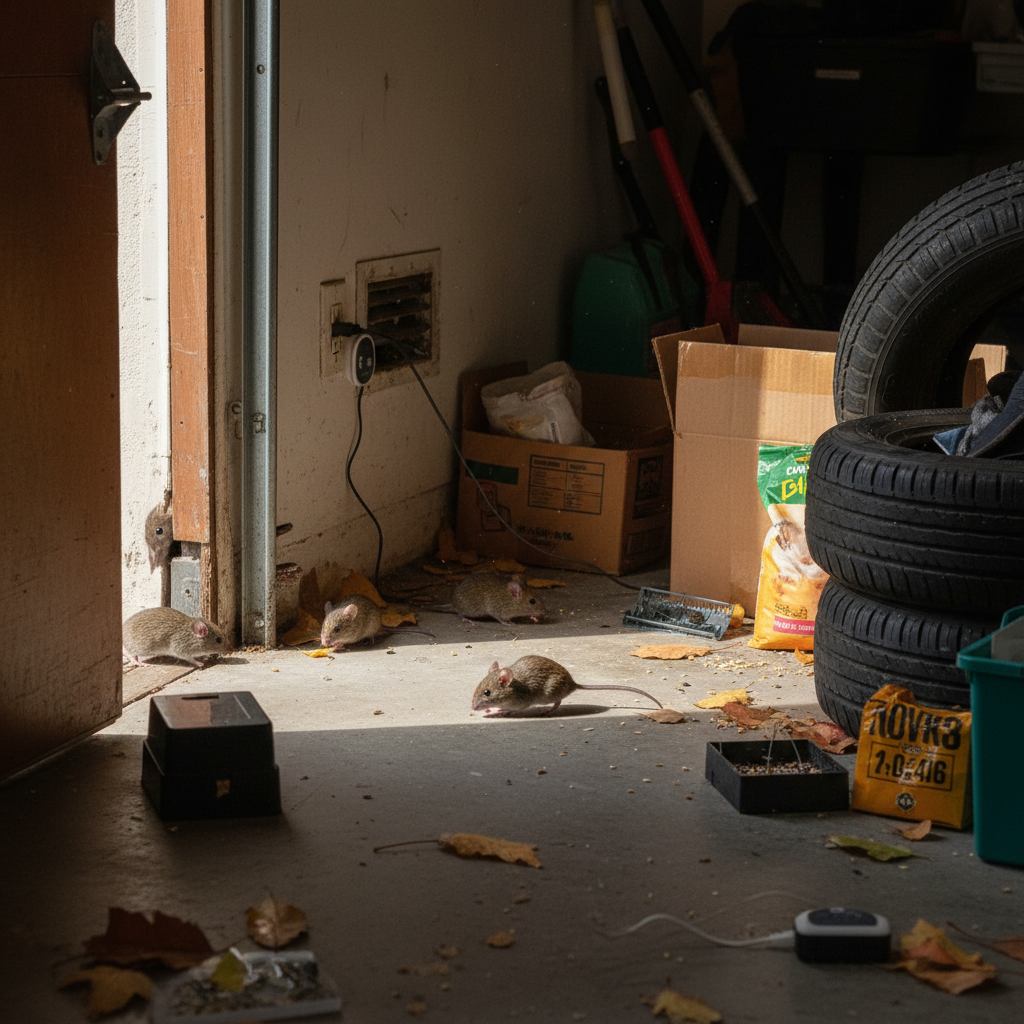
October is when the mouse calls start in Eastvale. Nights drop into the 50s, the fields and flood-control channels along the river dry out, and a mouse that spent the summer outside starts looking for a warm garage. A few weeks later someone finds droppings in the dog food bin or hears light scratching behind the laundry wall.
Ellett Exterminator handles rodent control for Eastvale homes and nearby cities. This post is about house mice, the small ones that live at floor level. If you are hearing heavier movement in the attic or finding chewed citrus, read our post on roof rats around Eastvale trails, attics, and fruit trees instead. Different animal, different plan.
Mouse or rat? Quick ways to tell
- Droppings: mouse droppings are about the size of a grain of rice with pointed ends. Roof rat droppings are noticeably bigger, closer to half an inch.
- Where you find them: mice leave droppings along garage walls, in kitchen drawers, under the sink, and behind the stove. Rats tend to leave them in the attic, on rafters, and near fruit trees.
- Noise: mice sound like light skittering inside a wall or a cabinet. Rats sound heavier and more often come from overhead.
- Damage: mice chew small, neat holes in cereal boxes, bird seed bags, and pet food. They shred paper, cardboard, and insulation for nests.
Not sure? Take a photo of the droppings next to a coin and send it when you call. That one photo saves a lot of guessing.
Why Eastvale garages are mouse magnets
Most Eastvale homes are tract builds with an attached garage, and the garage is where mice get in first. Here is what we see over and over:
- Worn garage door seals. The rubber bottom seal flattens or cracks, especially at the corners. A house mouse can squeeze through a gap about the size of a dime.
- Side doors and weatherstripping. The pedestrian door to the side yard often has daylight showing at the bottom.
- Pet food and bird seed. Big bags stored on the garage floor are the number one food source we find. Mice do not need much.
- Cardboard boxes against the wall. Holiday decorations and moving boxes stacked on the floor give mice cover and nesting material.
- Water heater and laundry closets. Gaps around pipes and the dryer vent line lead from the garage into the walls.
- Fridge or freezer in the garage. The warm motor area underneath is a favorite nesting spot.
Homes that back up to open land, the Santa Ana River trail side, or newer construction next to graded lots get more pressure in fall. Corona, Norco, Jurupa Valley, and Riverside homes see the same pattern, especially near equestrian property and feed storage.
How fast a few mice turn into a problem
House mice breed quickly, and a female can have several litters a year. One or two mice in October can be a dozen or more by the holidays if food and nesting spots stay available. That is why we tell people not to wait and see. The earlier we find the entry points, the smaller the job.
What you can do this weekend
Helpful:
- Move pet food, bird seed, and grass seed into hard plastic or metal bins with tight lids.
- Get boxes off the floor and onto shelves, and leave a few inches between storage and the wall so you can see droppings.
- Check the garage door bottom seal in daylight with the door closed. If you can see light at the corners, replace the seal.
- Add a door sweep to the side-yard door if there is a gap underneath.
- Look behind the water heater and washer for gaps around pipes and lines.
- Clean up droppings carefully: wear gloves, spray them with a disinfectant first, and wipe them up instead of sweeping or vacuuming dry droppings.
What usually wastes your time:
- Ultrasonic plug-ins. We have not seen them replace trapping and sealing.
- Glue boards everywhere. They catch a few mice, but they do not fix the gap that lets the next ones in.
- Tossing poison pellets around the garage. Pets and kids find them, and mice that eat them can die inside a wall where you will smell them for weeks.
- Peppermint oil and dryer sheets. Nice smell, no lasting effect.
When to call us
Call if you are finding fresh droppings in more than one spot, you hear activity inside the walls, you see a mouse during the day, or you have already set traps for a couple of weeks and are still catching mice. Daytime sightings and steady catches usually mean there are more than you think.
What our rodent visit looks like
We start outside, walking the garage door, side door, utility lines, weep screed, and vents. Then we look inside the garage, laundry area, kitchen cabinets, and under appliances. You get a clear list of where mice are getting in and what needs to be sealed.
From there we set a trapping plan for the inside and use tamper-resistant bait stations outside when the situation calls for it. We come back to check activity, because one empty trap does not prove the job is done. Sealing and trapping go together. Our rodent control service page has more on the full process.
Quick FAQ
Are mice in the garage a sign the house is dirty? No. Fall mice show up in clean homes all the time. They are looking for warmth and an easy gap, not a mess.
Will my cat or dog take care of it? Sometimes a pet catches one, but pets do not stop mice from coming in. A dog food bowl left out overnight can actually make it worse.
Can I stay in the house while you treat for mice? Yes. We keep traps and stations out of reach of kids and pets and tell you where everything is.
Do you service HOA communities and townhomes? Yes. In shared buildings, mice can move between units, so we will point out what is yours to fix and what to bring to the HOA.
Get mice out of your Eastvale garage before winter
Ellett Exterminator is a local, owner-run company led by Frank Ellett. We serve Eastvale (92880 and 91752), Corona, Norco, Jurupa Valley, and Riverside. Call (888) 273-7891, Monday through Friday from 7am to 6pm, or email frank@ellettexterminator.net. You can also start from our Eastvale service area page.